
In New York, timing isn't a nice-to-have — it's the whole shot. The same location can be a serene, empty masterpiece at 6am and an elbow-to-elbow tourist scrum by 10. Two clocks run at every spot: the light and the crowds. The trick is finding the window where both work in your favor.
- Golden hour — the hour after sunrise and before sunset. Warm, low, flattering light.
- Blue hour — the ~30 minutes after sunset, when the sky glows deep blue and city lights kick on. The magic window for skylines.
- Crowds peak late morning to late afternoon. Sunrise is your secret weapon at every popular spot.
DUMBO — Washington Street
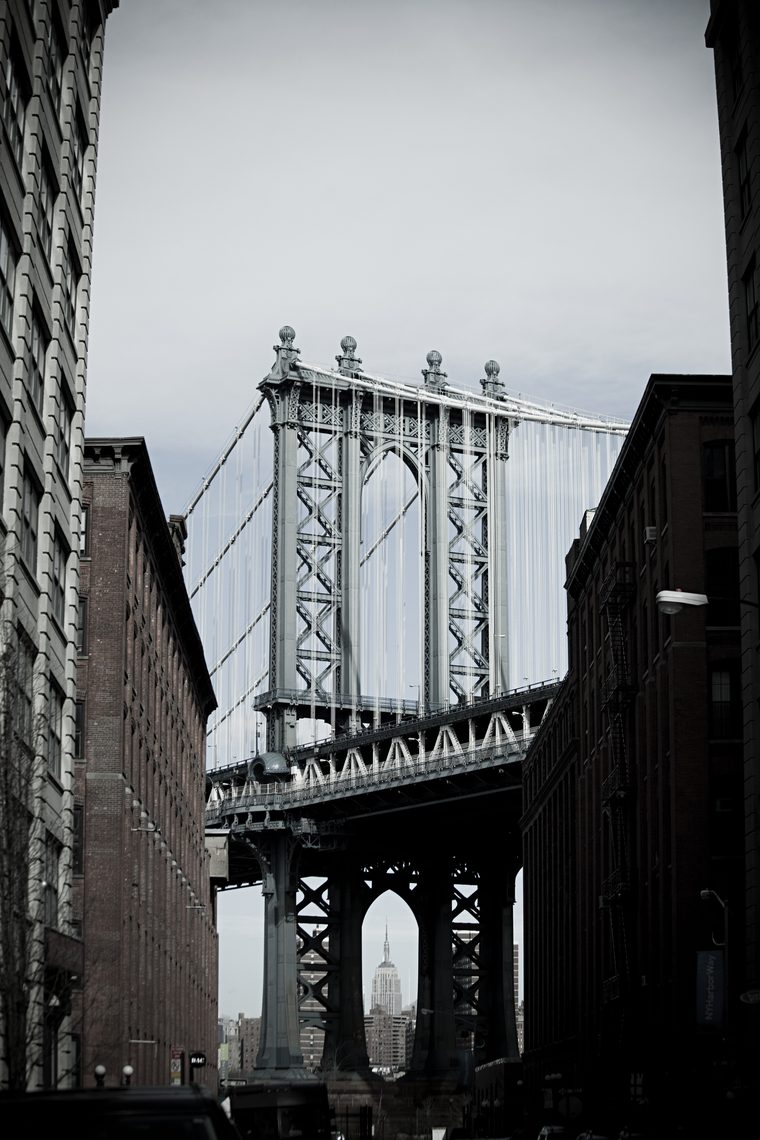
The Manhattan Bridge framed between the brick warehouses is the most-photographed frame in the city — which is exactly the problem. By 9am it's a queue of people taking the same picture.
Arrive before 7am and you'll often have the cobblestones to yourself, with soft light coming up the street. Golden hour at sunset works for the light but the crowd never really thins. Sunrise is the only time you get both.
The Skyline — Brooklyn Bridge Park & LIC
For the Lower Manhattan skyline from Brooklyn Bridge Park, or the Midtown skyline from Long Island City's Gantry Plaza, the hero window is unambiguous.
Shoot the 30 minutes after the sun drops: the sky holds color, the buildings light up, and the contrast between warm windows and cool sky is what makes a skyline sing. Get there 45 minutes early to set your composition while there's still light.
Central Park
820 acres means the answer depends on what you're shooting — but the crowd math is constant.
Early light rakes across the meadows and the Mall's elm tunnel, and you'll beat the joggers-and-tour-groups rush. Autumn (late October into November) is peak for color; a fresh snow makes it a different park entirely. Bethesda Terrace and Bow Bridge are quietest at dawn.
Times Square
The one spot where the usual rules invert. You're not there for soft light — you're there for chaos and neon.
Blue hour into full dark is when the billboards dominate and the energy reads. A slow shutter turns the cabs into light streaks. Rain is a gift here — wet asphalt doubles every neon sign in reflection.
Grand Central Terminal
An interior, so the "light" is really about the sunbeams through the great east windows.
From roughly November to February, low morning sun angles straight through the tall windows and lays those cathedral light shafts across the Main Concourse. Weekday mid-morning also thins the commuter rush. Remember: handheld is fine, but a tripod needs an MTA permit.
The one habit that beats all of this
Check the sunrise and sunset times for your shoot date, then add the location's crowd pattern on top. A great NYC shooter isn't the one with the best gear — it's the one who was standing in the right spot 20 minutes before everyone else showed up.
Scout the full directory
Every borough, what each location shoots best, and the permit reality before you go — so you show up ready, not guessing.
Open the Locations directory →